


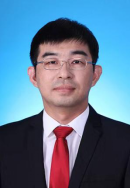
个人简介:
尹伟石(1980-),中共党员,2010年获吉林大学计算数学理学博士学位,长春理工大学数学与统计学院教授,硕士研究生导师。目前担任中国仿真学会不确定系统分析与仿真专业委员会委员、美国数学会评论员以及若干SCI刊物审稿人。主要研究兴趣是数学物理反问题、机器学习算法的设计与理论分析和微分方程数值解等。
2024年以第一完成人获吉林省自然科学奖三等奖。近些年发表科研论文40余篇,其中SCI检索论文20多篇,主持吉林省科技厅基金1项、吉林省教育厅重点和一般项目各1项、参与国家级自然科学基金面上项目4项。发表教改论文4篇,主持校级教改课题1项,目前主要承担本科生离散数学、数值逼近和机器学习等课程以及研究生反问题导论的授课工作。常年承担班导师工作,指导学生参加各种比赛,在2016年被评为“吉林省创青春优秀指导教师”,并指导多组学生获得全国大学生数学建模竞赛国家二等奖、省一等奖等。
主要学习工作经历:
学习:
1998年09月----2002年07月,延边大学(复旦大学联合培养),理学院,理学学士
2003年09月----2006年06月,延边大学(吉林大学联合培养),理学院,理学硕士
2006年9月----2010年6月,吉林大学,数学学院,计算数学,理学博士
工作:
2002年07月----2010年06月,延边大学,理学院,助教
2010年07月----2017年08月,长春理工大学,理学院,讲师
2017年09月----2021年09月,长春理工大学,理学院,副教授
2021年10月----2025年08月,长春理工大学,数学与统计学院,副教授
2025年9月----至今,长春理工大学,数学与统计学院,教授
出境访学经历:
2023.7-2023.8,香港城市大学,访问学者
2024.8-2024.8,香港城市大学,访问学者
电子信箱:yinweishi@cust.edu.cn;yinweishi@foxmail.com
从事专业:计算数学
研究方向:数学物理反问题与智能计算
主要教学工作:主要讲授本科生课程《离散数学》、《数值代数》、《数值逼近》、《统计机器学习》和《智能计算》,研究生课程《反问题导论》。近年来发表教改论文4篇,主持校级教改项目1项,获得校教学成果三等奖。指导本科生参加全国数学建模竞赛、挑战杯比赛,均有同学获得国奖。
教材或专著:
[1] 尹伟石、孟品超、张文丹、姜志侠、李延忠. 若干正反散射问题的数值算法研究[M]. 长春:吉林人民出版社,2015.
科研获奖:
[1] 2024年吉林省自然科学奖三等奖(数据驱动的反问题数值算法研究,2024Z30006,第一完成人)
科研项目:
[1] 基于行人流线网络的轨道交通枢纽客流-设施协同管控方法研究(51278221),国家自然科学基金面上项目,2013.01----2016.12,83万元,参与.
[2] 基于可靠性的综合客运枢纽内部大客流组织方法研究(51378076),国家自然科学基金面上项目,2014.01----2017.12,70万元,参与.
[3] 声学和电磁学中某些多频反源问题的数值分析与计算(11671170),国家自然科学基金面上项目,2017.01----2020.12,48万元,参与.
[4] 农作物种子内虫卵的无损检测研究(JJKH20210797KJ),吉林省教育厅,2021.01----2022.12,2.5万元,主持.
[5] 基于数据驱动与模型驱动的时域反源问题研究(20220101040JC),吉林省科技厅,2022.07----2025.07,10万元,主持.
[6] 无触三维人体重建(JJKH20240893KJ),吉林省教育厅重点项目,2024.01-2025.12,5万元,主持.
[7] 双调和波方程反散射问题的分析与计算(12571452), 国家自然科学基金面上项目,2026.01----2029.12,46万元,参与.
学术论文:
[1] Weishi Yin*, Wenhong Yang, Hongyu Liu. A neural network scheme for recovering scattering obstacles with limited phaseless far-field data. Journal of Computational Physics, 2020, 417:109594. (TOP)
[2] Pinchao Meng*, Lin Su, Weishi Yin, Su Zhang. Solving a kind of inverse scattering problem of acoustic waves based on linear sampling method and neural network. Alexandria Engineering Journal, 2020, 59:1451-1462.(TOP)
[3] Weishi Yin*, Jiawei Ge, Pinchao Meng, Fuheng Qu. A neural network method for the inverse scattering problem of impenetrable cavities. Electronic Research Archive, 2020, 28(2): 1123-1142.
[4] Pinchao Meng*, Xinyu Wang, Weishi Yin. ODE-RU: a dynamical system view on recurrent neural networks. Electronic Research Archive, 2022, 30(1): 257-271.
[5] Yunwen Yin, Weishi Yin*, Pinchao Meng and Hongyu Liu. The interior inverse scattering problem for a two-layered cavity using the Bayesian method. Inverse Problems and Imaging, 2022, 16(4):673-690.
[6] Yunwen Yin, Weishi Yin*, Pinchao Meng and Hongyu Liu. On a hybrid approach for recovering multiple obstacles. Communications in Computational Physics, 2022, 31(3):869-892.(TOP)
[7] Weishi Yin*, Ziyuan Yang, Pinchao Meng. Solving inverse scattering problem with a crack in inhomogeneous medium based on a convolutional neural network. Symmetry, 2023, 15(1):119.
[8] Ping Zhang, Pinchao Meng*, Weishi Yin, Hongyu Liu. A neural network method for time-dependent inverse source problem with limited-aperture data. Journal of Computational and Applied Mathematics, 2023(421): 114842. (TOP,Highly cited)
[9] Pinchao Meng*, Yuanyuan Chai, Weishi Yin. Dual-driven solver for reconstructing the point sources of elastic wave based on far-field data. Universe, 2023,9,148.
[10] Weishi Yin*, Hongyu Qi, Pinchao Meng. Broad learning system with preprocessing to recover the scattering obstacles with far-field data. Advances in Applied Mathematics and Mechanics, 2023, 15(4):984-1000.
[11] Pinchao Meng*,Lin Wang, Weishi Yin, Linhua Zhou. A novel recurrent neural network of gated unit based on Euler’s method and application. Communications on Analysis and Computation, 2023, 1(2): 116-134.
[12] Weishi Yin*, Xingyu Shi, Pinchao Meng, and Fuheng Qu. Research on recovering scattering obstacles in inhomogeneous medium based on Bayesian method. Applicable Analysis,2024, 103 (17):3197-3212.
[13] Weishi Yin*, Baoyin Zhang, Pinchao Meng, Linhua Zhou, Dequan Qi. A Neural Network Method for Inversion of Turbulence Strength. Journal of Nonlinear Mathematical Physics, 2024, 31:22.
[14] Pinchao Meng*, Jiabao Zhuang, Linhua Zhou, Weishi Yin, and Dequan Qi. Efficient synchronous retrieval of OAM modes and AT strength using multi-task neural networks. Optics Express, 2024, 32(5):7816.(TOP)
[15] Yue Tai, Xiuli Wang, Pinchao Meng*, Weishi Yin. Weak Galerkin method for the Navier-Stokes equation with nonlinear damping term. Networks and Heterogeneous Media, 2024, 19(2): 475-499.
[17] Weishi Yin*, Zhengxuan Shen, Pinchao Meng, Hongyu Liu. An online interactive physics- informed adversarial network for solving mean field games, Engineering Analysis with Boundary Elements, 2024, 169(B):106002.
[18] Pinchao Meng*, Zhaobin Xu, Xianchao Wang, Weishi Yin, Hongyu Liu. A novel method for solving the inverse spectral problem with incomplete data. Journal of Computational and Applied Mathematics, 2025 (463): 116525. (TOP)
[19] Jiabao Zhuang, Pinchao Meng*, Weishi Yin. A stable neural network for inverse scattering problems with contaminated data. Knowledge-Based Systems, 2025(310):113001.(TOP)
[20] Ze Yuan, Pinchao Meng, Weishi Yin, Linhua Zhou*. Turbulence mitigation in optical imaging using pyramid attention GAN. Optics and Laser Technology, 2025(188):112880.
[21] Yuhan Xiao, Zezhong Jiang, Pinchao Meng, Weishi Yin, Dong Qi, Linhua Zhou*. Local manifold approximation of dynamical system based on neural ordinary differential equation. Physica D: Nonlinear Phenomena, 2025: 134688.
[22] Longqiang Xu, Weishi Yin*, Pinchao Meng, Zhengxuan Shen, Hongyu Liu. An online interactive physics-informed diffusion-adversarial network for solving mean field games. Journal of Computational Physics, 2026, 552: 114700.(TOP)
社会兼职
中国仿真学会-不确定系统分析与仿真专委会委员
美国数学会评论员
中国工业与应用数学会会员
 地址address
中国吉林省长春市卫星路7089号(东) 7186号(南)、7989号
 联系我们contact us
0431-85583266
 邮箱mailbox
sxytjbg@cust.edu.cn

长理数苑
长理数苑
 当前位置:
当前位置: